
Blog · November 3, 2026 · 5 min read
Boutique Hotel Website for the Riviera Maya: How to Get Direct Bookings
A boutique hotel website in the Riviera Maya can drive direct bookings when it has the right ingredients: your own booking engine, authentic photography, and clear trust signals.
- boutique-hotel
- riviera-maya
- direct-bookings
- hotel-website
- vacation-rental-websites
- booking-system
- local-seo
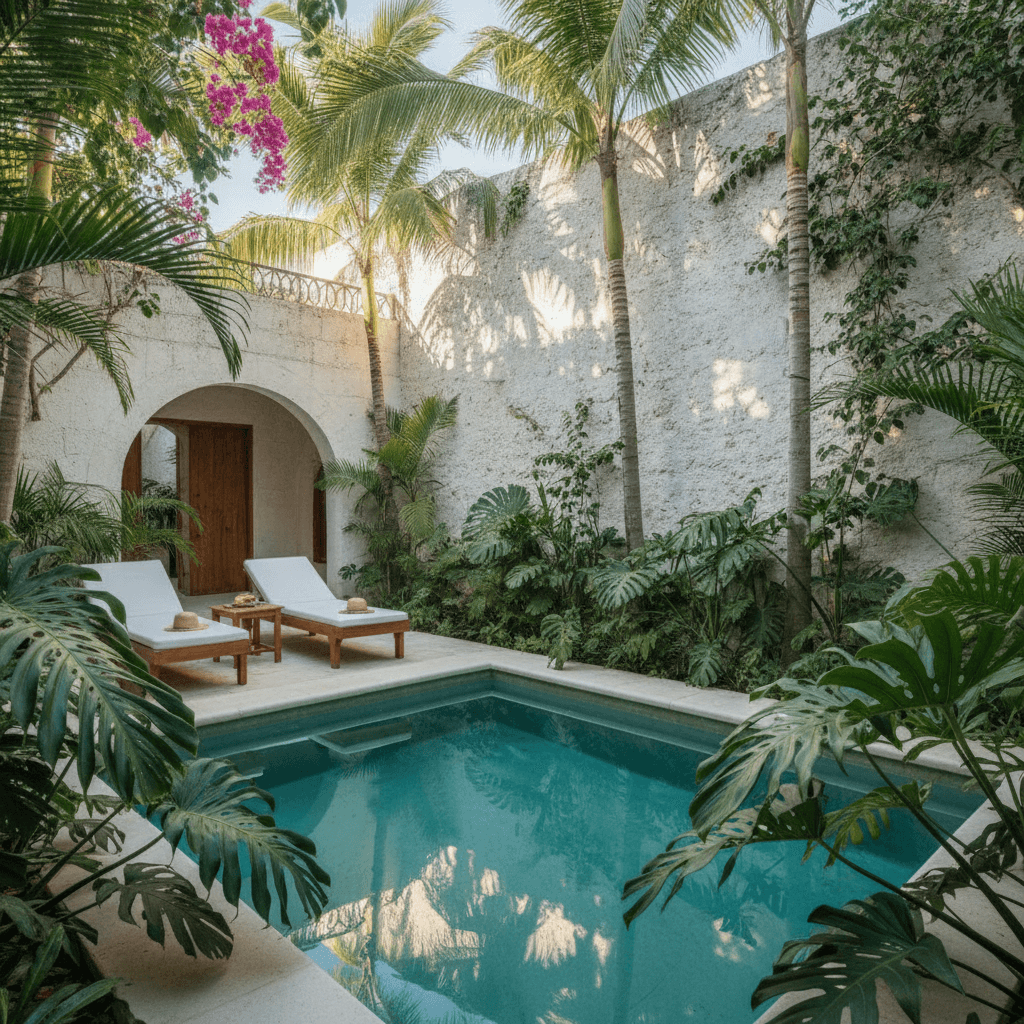
A boutique hotel website on the Riviera Maya can turn visitors into guests without relying on Booking.com, Expedia, or Airbnb. The difference between a site that generates bookings and one that only gets browsed comes down to three things: how well you present the experience, how much confidence you give a stranger to pay someone they've never met, and how easy you make the actual process.
If you're already listed on OTAs (distribution platforms like Booking.com or Expedia that charge between 15% and 25% commission per booking), you don't have to walk away from them. But you can build a direct channel that reduces that dependency month by month.
Why your boutique hotel site needs its own story
OTAs show your property alongside dozens of other options. Your own site is the only place where the conversation is exclusively about you.
A boutique hotel in Tulum or Akumal has something major hotel chains simply can't offer: character. That identity, that story, that specific atmosphere is exactly what makes booking direct worthwhile. If your site looks like a Booking.com listing, travelers have no reason to leave the platform.
Here's what actually works:
- An opening statement that tells visitors precisely what kind of experience they're getting. Not "boutique hotel on the Riviera Maya," but something like "12 suites with private gardens 200 meters from the ocean — no speakers, no entertainment staff."
- Photos and short video shot in natural light, showing your spaces as they actually look on an ordinary Tuesday, not just during a polished photo session.
- A section that clearly spells out what a direct booking includes: breakfast, late checkout, airport transfer — whatever is real and verifiable.
The booking engine: the technical heart of your site
Without your own booking engine — a system that lets guests check availability, select dates, and pay without ever leaving your site — direct bookings simply aren't possible.
You don't need the most expensive system on the market. You need one that works smoothly on mobile, displays real-time pricing, and accepts credit cards or bank transfers. Tools like Lodgify, Cloudbeds, or Little Hotelier are built for boutique properties and connect directly to your site.
What matters most is that there's no friction — no unnecessary or confusing steps that cause users to drop off — between "I want to book" and "I've booked." Three steps is the ideal: dates, room, payment.
If you also connect that engine to a channel manager — software that syncs your availability across all platforms simultaneously — you avoid the double-booking problem that comes with selling through multiple channels at once.
You can see how we structure these systems on our reservations and scheduling systems page.
Trust signals: what tells a stranger it's safe to pay
A traveler who lands on your site for the first time has no way of knowing whether you're a real hotel or just an Instagram account with nice photos. That doubt is what pushes them back to Booking.com, where reviews are verified and cancellation policies are clearly stated.
To overcome it, your site needs:
Real, recent reviews
Not screenshots from TripAdvisor. Ideally, an embedded widget that pulls Google or Tripadvisor reviews in real time. If you have more than 4.3 stars with over 50 reviews, put them on your homepage.
Cancellation policy visible before payment
Don't bury it in the terms and conditions. Place it right next to the price. A guest who sees "free cancellation up to 72 hours before arrival" feels more confident — and books more readily.
Real human contact details
An actual phone number, an active WhatsApp line, and the name of the person who responds. Many boutique hotels have all of this but never put it on their site. Showing it significantly reduces the sense of risk.
The direct advantage OTAs can't match
One of the most effective reasons to get someone to book on your site instead of Booking.com is offering something the platform simply can't provide.
It doesn't have to be a steep discount. It could be:
- A room upgrade at the same price for bookings made 30 days in advance.
- Breakfast included exclusively for direct bookings.
- A free consultation with your team on activities, tours, or transfers.
This is called a direct booking incentive, and it's one of the most proven strategies in boutique hospitality. Put it somewhere prominent on your site — not buried at the bottom. A banner on the homepage or a simple comparison table showing direct vs. OTA benefits communicates the value immediately.
If you want to understand how this connects to search engine visibility, take a look at our SEO setup service.
Your site has to work flawlessly on mobile
Most travelers searching for boutique hotels on the Riviera Maya are doing it from their phones. If your site takes more than three seconds to load, if photos don't display well on a small screen, or if the booking button gets covered by the navigation menu, you've lost the booking.
This isn't optional. A mobile-first site — designed with the phone experience as the starting point, not an afterthought — is the foundation. When you work with us on custom website development, that's where we begin, not a bonus feature.
Test your current site on the phone of someone who's never seen it before. Time how many seconds it takes for the booking page to load. That number tells you a lot.
Do this this week
- Open your site on mobile and count the steps from landing to completing a booking. If it's more than four, there's friction to remove.
- Check whether your direct price is visible on the homepage. If finding it requires three clicks, it isn't really visible.
- Add a paragraph that describes the specific experience you offer. Not the destination — what actually happens once guests are inside your property.
- Set up a WhatsApp chat with an automatic welcome message for visitors who arrive outside business hours.
- Compare your Booking.com listing to your own site. If the listing has more information than your site, that's the first problem to fix.
Next step
If you already have a site and want to know where it's losing direct bookings, we can walk through it together. Send us a message or schedule a call — no commitment required. We won't promise magic results, but we will tell you exactly what to change and why.
Written by JMW Development · Based in Playa del Carmen
← All articles
Liked this article?
Want something like this for your business?
Book a free 30-minute call. We'll talk through what you are building and come back with a clear next step within 24 hours.