Blog · August 20, 2026 · 6 min read
Multilingual Website Mexico Tourism: When Adding Languages Actually Helps
A multilingual website sounds like a smart move for any tourism business in Mexico. But adding languages costs time and money — so when does it actually pay off?
- multilingual-website
- mexico-tourism
- playa-del-carmen
- cancun
- tulum
- riviera-maya
- website-development
- local-seo
- tourism-marketing
- quintana-roo
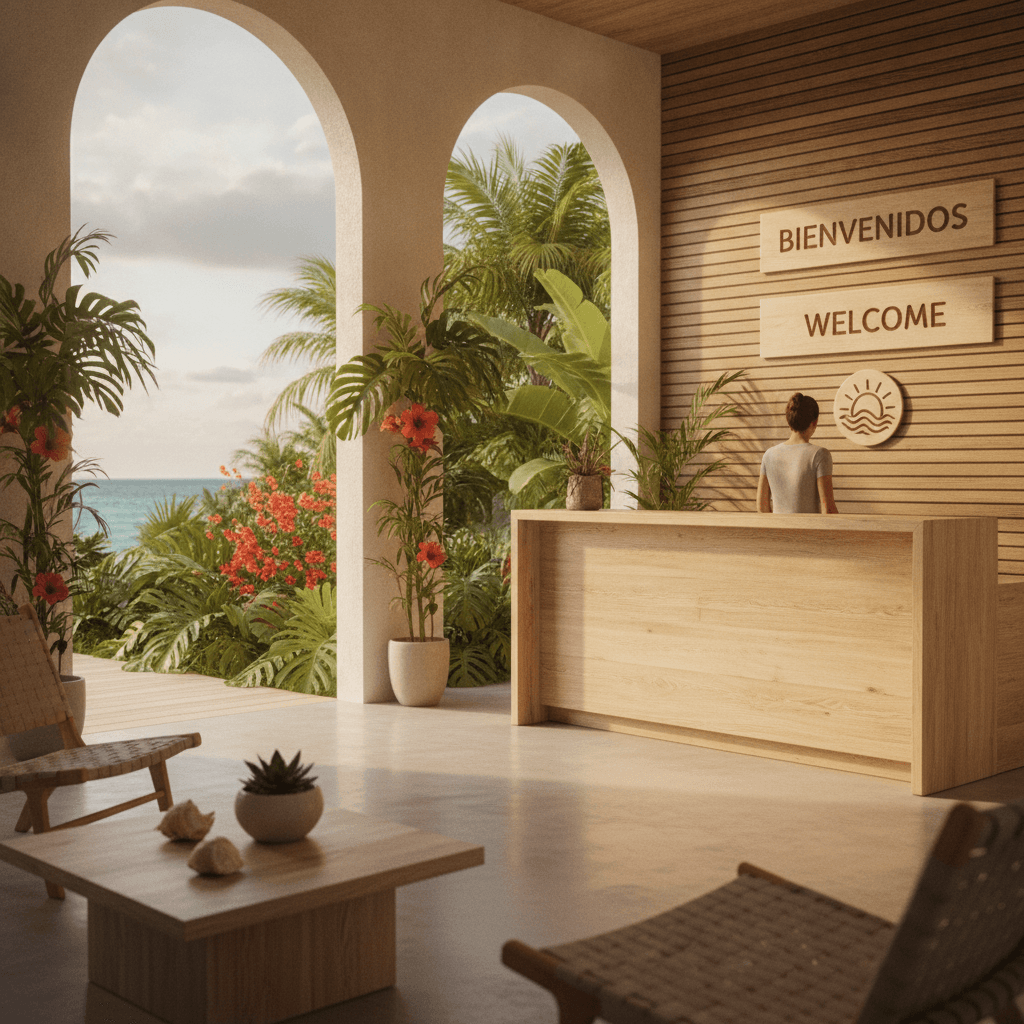
Running a tourism business in Playa del Carmen, Tulum, or anywhere along the Riviera Maya means you're already used to dealing with guests from dozens of countries. Some speak Spanish. Many speak English. Others speak French, German, Italian, or Portuguese. Your website, though, probably speaks one language — and that may be costing you bookings.
But before you rush to add five language versions to your site, it's worth asking: when does going multilingual actually help, and when is it just extra work?
Who Is Actually Visiting Your Website?
The first question to answer isn't about languages at all — it's about your visitors.
If you run a dive shop, eco-tour, or boutique hotel in Quintana Roo, your website traffic likely comes from a mix of international travelers researching their trip in advance and local or domestic guests booking closer to their dates. These two groups often arrive from different places, search in different languages, and need different things from your site.
Check your Google Analytics or Search Console data. If a significant share of your traffic comes from the United States, Canada, or Europe — and those visitors are bouncing quickly or not converting — language could be part of the problem.
A simple way to spot the gap
Look at where your traffic comes from by country. Then look at which pages have the highest bounce rates. If visitors from English-speaking countries are landing on a Spanish-only page and leaving within seconds, that's a signal. The reverse is also true: a site in English only may lose domestic Mexican guests who feel more comfortable in Spanish.
When a Bilingual Site Actually Converts
For most tourism businesses in the Cancún–Tulum corridor, the practical answer is two languages: Spanish and English. Here's when that combination makes a real difference.
You're selling direct bookings to international guests
If part of your business strategy involves reducing reliance on OTAs and booking platforms — and many tour operators, villa rentals, and boutique hotels are moving in this direction — your own site needs to earn trust from international visitors. A traveler from Chicago or Toronto who lands on a Spanish-only page may assume the business doesn't cater to them, even if it absolutely does. A clean English version removes that doubt immediately.
For vacation rental owners or boutique properties thinking about direct booking flows, the language of your site is part of your credibility. It signals that you're set up to communicate with that guest from inquiry to checkout.
Your inquiry forms are getting abandoned
Contact forms and booking flows are where language barriers bite hardest. A visitor might browse your site with some understanding of Spanish, but when it comes to actually filling in a form or understanding your cancellation policy, uncertainty creeps in. That moment of hesitation often ends with a closed tab.
If you've noticed a high rate of form views but low completions, try translating your key conversion pages — the booking page, the pricing section, and the FAQ — into English as a first step. You don't need to translate every blog post. Focus on the pages that directly precede a purchase decision.
You attract specific international markets
Some businesses in the Riviera Maya have a clearly defined guest profile. A yoga retreat might draw heavily from the United States and Germany. A French-Canadian couple that runs a bed and breakfast in Playa del Carmen might naturally attract Francophone visitors. A sportfishing operation targeting American anglers has a very specific audience.
In these cases, adding a third language — French, German, or another — can make strategic sense. But only if that audience is large enough to justify the upkeep. A poorly maintained French translation that hasn't been updated in two years can do more damage than no French version at all.
When Multilingual Sites Become a Burden
Adding a language to your site isn't a one-time task. Every time you update your pricing, change your services, or write a new piece of content, you need to update every language version. If you're a small operation managing your own site, this can become overwhelming fast.
There's also a quality issue. Machine-translated content — the kind you get from copying text into Google Translate and pasting it onto your site — is often immediately obvious to native speakers. It can undermine trust rather than build it. If you're going to offer a language on your site, it should be reviewed by someone who actually speaks it.
For businesses just starting out or those with a limited budget, a smarter move might be to build your main website in your primary language first, make sure it converts well, and then add a second language once the ROI is clear.
How to Structure a Multilingual Tourism Site That Works
If you've decided a multilingual site makes sense for your business, here are the practical things to get right.
Use separate URLs for each language
The cleanest approach is to use separate URL paths for each language version — something like /en/ for English and /es/ for Spanish. This helps search engines understand which version to show to which audience and avoids confusion. It also makes it easier to track performance separately in your analytics.
This is one of the areas where working with a developer who understands SEO setup from the start saves you from having to undo mistakes later.
Don't just translate — adapt
A good multilingual site doesn't just swap words from one language to another. It considers what each audience actually needs to know. An American visitor might want to understand how far your location is from the Cancún airport. A Mexican domestic traveler might want to know about payment methods and whether you accept bank transfers.
Think about the questions each audience asks before booking, and make sure each language version answers those questions clearly.
Keep the user experience consistent
Your English and Spanish versions should feel like the same business — same quality photos, same clear navigation, same easy path to making a reservation or sending an inquiry. A common mistake is investing heavily in one language version and treating the other as an afterthought.
Where to Start If You're Not Sure
If you're uncertain whether a multilingual site is right for your business right now, start with the data. Look at your traffic sources, your conversion rates by country, and where visitors are dropping off.
For many tourism businesses along the Riviera Maya, the answer is yes — an English and Spanish site will serve you better than one language alone. But the execution matters as much as the decision. A well-built bilingual site with clean navigation and accurate translations will outperform a five-language site that's been slapped together without a clear strategy.
If you'd like to talk through what makes sense for your specific business, get in touch — we work with tourism operators across Playa del Carmen, Tulum, Cancún, and the wider Quintana Roo region to build websites that actually convert.
Written by JMW Development · Based in Playa del Carmen
← All articlesKeep reading
More from the JMW Journal


Liked this article?
Want something like this for your business?
Book a free 30-minute call. We'll talk through what you are building and come back with a clear next step within 24 hours.