
Blog · July 21, 2026 · 6 min read
Restaurant Online Menu Website: Make Your Menu Work Harder for Your Business
If your menu only lives on a delivery app or a social media post, you're leaving money on the table. Here's how owning your online menu changes the game.
- restaurant-websites
- online-menu
- playa-del-carmen
- cancun
- tulum
- riviera-maya
- quintana-roo
- local-seo
- web-design
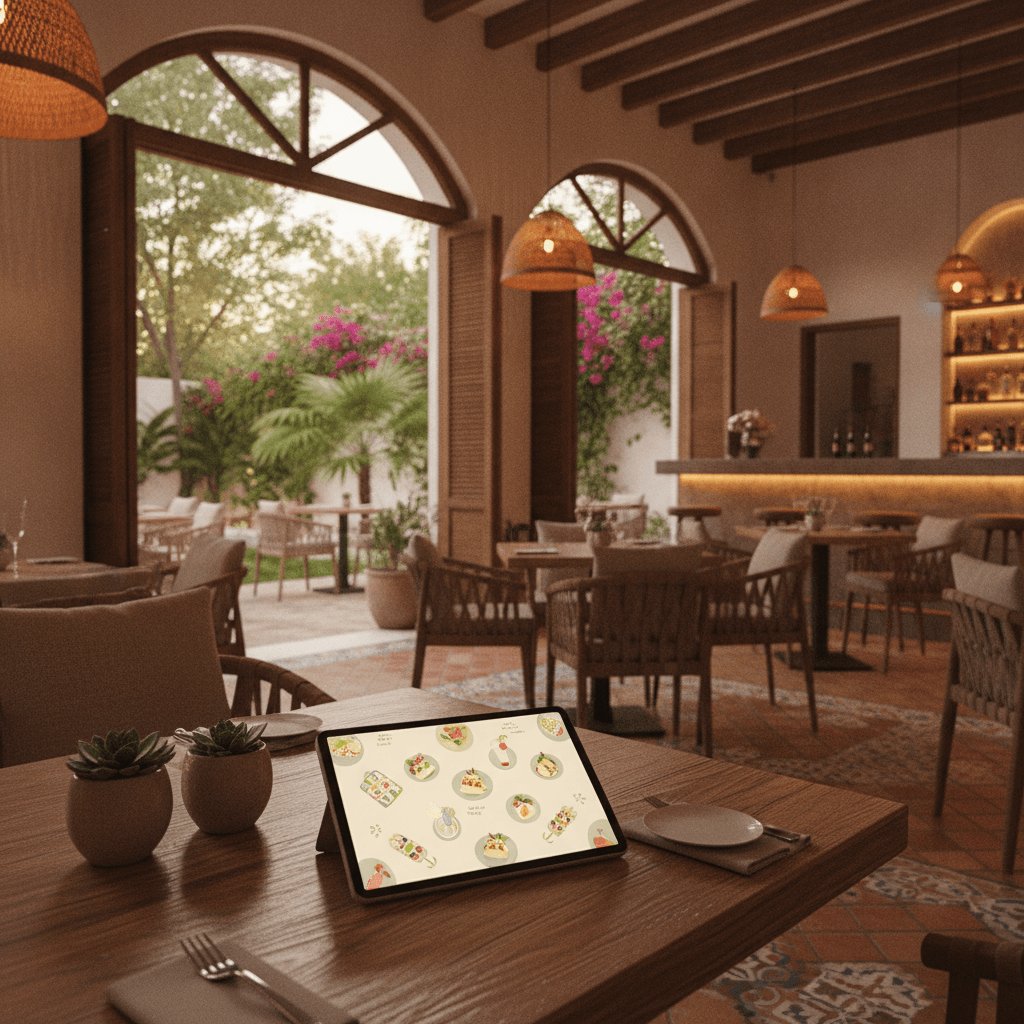
Most restaurants in Playa del Carmen, Cancún, and Tulum have a presence on at least one delivery platform or social media channel. That's a good start. But if your menu only lives there — not on a website you actually own — you're handing control of a critical part of your business to someone else.
This post explains why publishing your menu on your own website matters, what it does for your search visibility, and what a well-structured menu page actually looks like.
Why Delivery Apps and Social Media Aren't Enough
Delivery platforms like Rappi, Uber Eats, and iFood are useful distribution tools. Social media helps you stay in front of repeat customers. But neither is a substitute for your own online presence when it comes to attracting new diners.
You Don't Control the Experience
When someone finds your restaurant through a third-party app, they see your food alongside every competitor in the area. The platform controls the layout, the search filters, the fees, and even whether your listing shows up at all. Your branding takes a back seat.
On your own website, a visitor lands directly on your page. They see your photos, your story, your prices, and your menu — presented the way you want, without distraction.
Menus Posted as Images Are Hard to Use
Many restaurants post their menu as a photo or a PDF on social media. This is better than nothing, but it creates real problems. Photos are hard to read on a small screen, they don't scale well, and they're invisible to search engines. A PDF buried in your Instagram bio isn't helping anyone find you on Google.
A structured HTML menu — actual text on a real webpage — is readable, searchable, and accessible on any device. That matters especially in a region like the Riviera Maya, where most of your potential customers are browsing on a phone.
Social Media Posts Get Buried
If you update your menu seasonally or change your prices, your old posts don't disappear — they just get harder to find. A customer scrolling back through six months of posts trying to figure out if you still serve a particular dish is a customer who's about to give up. Your website menu is always the current version, in one place, easy to find.
What Your Own Menu Page Does for Search Visibility
This is where the practical business case gets interesting. A properly built restaurant online menu website can bring you customers who aren't looking for you specifically — they're searching for a type of food or dining experience in your area.
Google Reads Text, Not Images
When your menu is written out as real text on a webpage, search engines can read it. If your menu includes wood-fired pizza, fresh ceviche, or vegan options in Tulum, those terms can show up in search results when someone types exactly that into Google. An image of your menu doesn't help with this at all.
Pairing a clear menu with basic SEO setup for your restaurant website means you're more likely to appear when a tourist or local is searching for somewhere to eat tonight.
Your Website Builds Authority Over Time
Every page you publish, every update you make, and every link someone shares to your site adds up. Delivery apps and social profiles don't build that kind of long-term visibility for your specific business — they build it for their platform. The work you put into your own website compounds over time in a way that renting space on a third-party app never will.
What a Good Restaurant Menu Page Actually Looks Like
A menu page doesn't need to be complicated. It needs to be clear, easy to navigate, and honest about what you offer.
Organize by Category
Group items logically — starters, mains, desserts, drinks — so a visitor can scan quickly. Use real headings, not just bold text, so the page has structure. If you have a separate lunch and dinner menu, give each its own section or page.
Include Prices
This is more important than most restaurant owners realize. When prices aren't listed, people assume the worst or click away entirely. Displaying prices — even approximate ones — reduces friction and builds trust. If your prices change with the season or market, you can say that clearly.
Add Photos Where They Help
You don't need a photo of every dish. A few well-lit images of your best plates make the page more appealing without slowing it down. Compressed, properly sized images keep your page loading fast, which matters for mobile users and for Core Web Vitals that affect your Google rankings.
Make It Easy to Take the Next Step
Your menu page should include a clear path to book a table, call you directly, or get directions. A phone number, a WhatsApp link, or a simple reservation form right on the page removes the extra steps that cause people to give up. If you need help connecting those tools, a custom website built for your restaurant can bring all of this together cleanly.
A Note on Keeping It Updated
One of the most common complaints diners have is showing up to a restaurant and finding the online menu is out of date. Seasonal closures, price changes, and new dishes should be reflected on your site within a day or two of the change.
If you're using a content management system that's easy to edit, this takes a few minutes. If your site is hard to update, that's worth fixing — because an inaccurate menu is worse than no menu at all.
The Simple Version
Running a restaurant in Quintana Roo — whether it's a small spot in Tulum, a busy café in Playa del Carmen, or a seafood place in Cancún — means competing for attention from both locals and a constant flow of tourists. You need every advantage you can get.
Owning your menu online isn't a luxury or a technical project. It's a straightforward step that puts your information in front of the right people, in the format they expect, without giving a platform a cut of every order or the power to change how your restaurant is presented.
If your menu isn't on your website yet — or if it's posted as an image that nobody can read on a phone — that's a good place to start. Get in touch with us if you'd like to talk through what this looks like for your restaurant specifically.
Written by JMW Development · Based in Playa del Carmen
← All articlesKeep reading
More from the JMW Journal

Liked this article?
Want something like this for your business?
Book a free 30-minute call. We'll talk through what you are building and come back with a clear next step within 24 hours.